Improve
What this means
Busy, but the profit doesn't show for it. I find what's quietly leaking and fix it.
PeakRatio makes a founder-led business run without the founder, so it's worth more, and you're not trapped running it.
You don't have to be selling. Build it to that standard anyway, and it runs better, worth more if you ever do.
Pick yours.
Busy, but the profit doesn't show for it. I find what's quietly leaking and fix it.
Grow, or get investment-ready, without the wheels coming off as you do.
The people, systems and rhythm so it runs when you're not in the room.
Get the numbers and the business into the shape a buyer pays a premium for.
£1,495
+VAT, fixed. No surprises.
One structured pass across the whole business. The thing holding it back gets found on evidence, not a hunch.
Loss to profit
Turned a loss-making business back to profit, and found a public body around £100k a year.
Kept trading
Worked with a small business to renegotiate its position with HMRC, and kept it running.
£100m+
Engineering systems, scaled for SMEs
Built the systems behind a £100m+ engineering business, then scaled them for SMEs.
£3m
A buy-side financing bid
Due diligence, financial modelling and a £3m financing bid, run from the buyer's side.
Board advisor
Board advisor to tech venture BioTwin on strategy and investor readiness.
"His strategic clarity and commercial acumen sharpened how we approached scaling and investor engagement, and added real structure to the big decisions."Kit Chong, BioTwin
Most advisors know the front of a business or the back of it. I connect the two: that join is where the profit usually hides.
I've also sat on the other side of the table. I know what a buyer looks for, what an investor questions, and what makes them walk away, because I've been the one asking.
It runs from subsea engineering, to the systems behind a £100m+ engineering business, to a £600k+ property business of my own.
No hype. I find the one thing, I build the fix, and you keep the machine.
If that's the read you want on your business, book the 15-minute call.
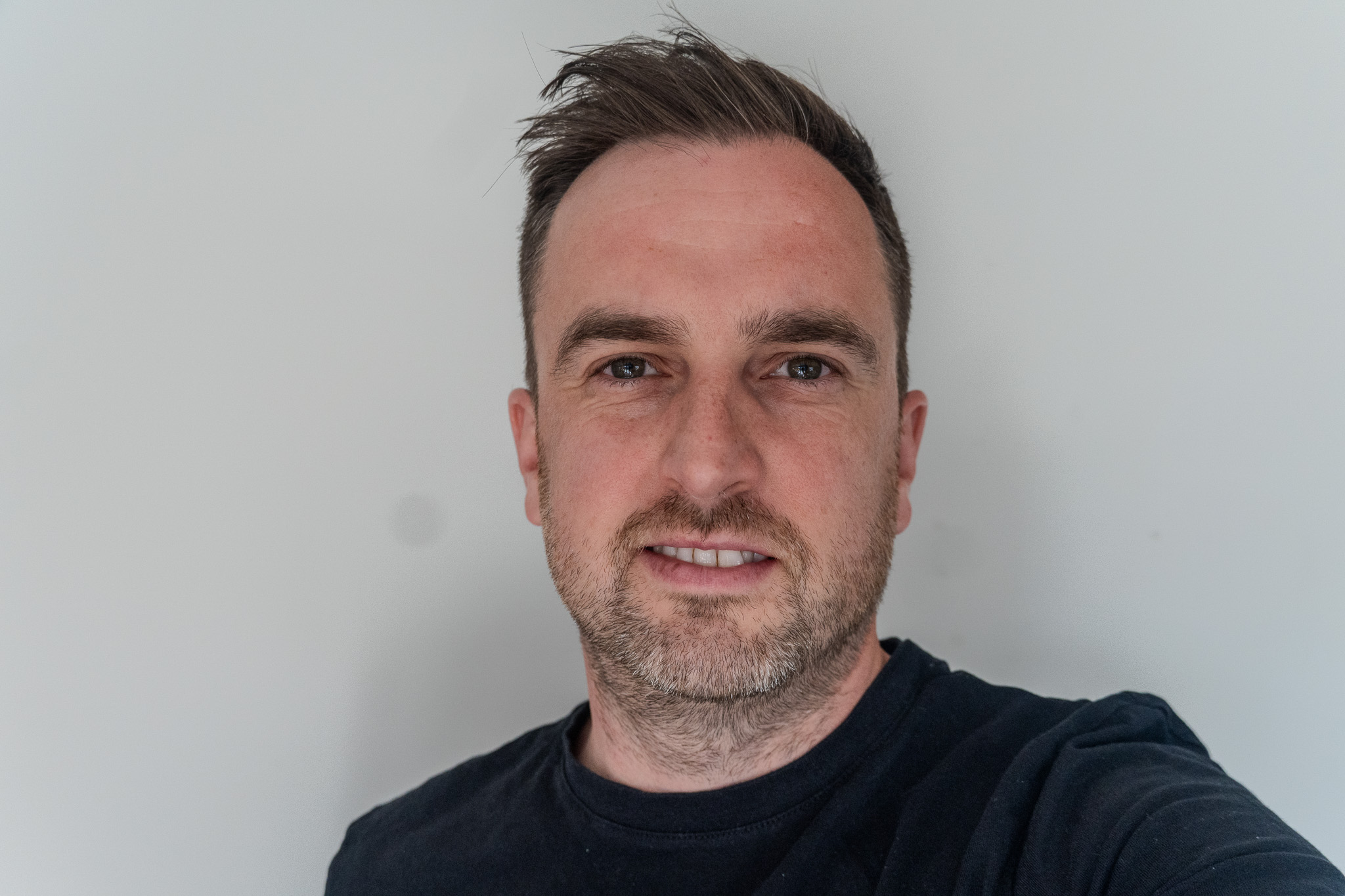
Brian Valentine
Founder, PeakRatio
Everything here is written from real work with founder-led SMEs. No gate, no sign-up. Find your situation and start reading.
New articles land here first. If a topic matters to your business and it isn't covered, tell me and I'll write it, or we can dig into it on the call.
It's a free, one-page check on the health of the business. Sixteen questions, five minutes, and it shows you where to look first. You can do it on your own, before talking to anyone.
Five minutes, and there's nothing to sign up to.
Fifteen minutes, no obligation. Tell me what's heavy about running the business right now, and I'll tell you honestly whether the diagnostic would help.
Book the 15-minute callPick a time that suits you. It books straight into both calendars.
The word "transformation" gets attached to almost everything in business now. A new website is a "digital transformation." A restructured team is an "organisational transformation." A new ERP system is a "technology transformation."
Most of it isn't transformation. It's change, useful, necessary change, but change nonetheless.
Genuine business transformation is rarer, more difficult, and more consequential. Understanding the difference matters a great deal, because what you call something shapes how you approach it.
Transformation is a fundamental shift in how the business creates and delivers value, not just an improvement in how well it does what it already does.
A plumbing company that switches from paper job sheets to a digital scheduling tool has made an improvement. A plumbing company that rebuilds its model around ongoing maintenance contracts rather than reactive callouts, changing its customer relationships, revenue model, pricing structure, and operational rhythm, has transformed.
The distinction matters because improvements and transformations require different approaches, different timelines, and different levels of disruption. Running a transformation programme when you actually needed an improvement is expensive and destabilising. Treating a transformation need like an improvement problem means it never fully lands.
The majority of business transformation programmes underdeliver. The reasons are consistent enough that they're worth naming.
The change isn't tied to a clear strategic outcome. "We need to be more digital" or "we need to be more agile" are not strategic outcomes. They're directions. Without a specific outcome, retain X customers, open Y new revenue stream, reduce cost-to-serve by Z%, there's no way to know if the transformation is working, and no pressure point to keep it on track.
The organisation wasn't ready. Transformation requires capacity, not just time, but mental and operational bandwidth. A business running at 110% capacity, firefighting daily, cannot simultaneously transform itself. Something has to give. Either create the space deliberately or wait until there is some.
The change was delivered to the organisation rather than built with it. This is the classic consulting failure. An external team arrives, does a diagnostic, produces a strategy document, presents it to the leadership team, and leaves. Six months later, nothing has changed. The people who need to implement the transformation weren't part of building it and don't own it.
The sponsor lost interest or changed. Transformation takes longer than most people expect. It typically takes 18-36 months for a genuine transformation to be embedded. Projects that start with strong leadership sponsorship often drift when that sponsor moves on, changes priorities, or simply loses momentum when the early energy fades.
The business tried to transform everything at once. Transformation is easier to sustain when it's sequenced. Change the model, then build the capability to support it. Change the customer relationships, then change the operations that serve them. Trying to change everything simultaneously creates confusion, spreads attention too thin, and makes it impossible to learn what's working.
Transformation that actually embeds, that becomes the new normal rather than reverting, tends to share a few characteristics.
It starts with a clear, honest diagnosis. Not "we think we should be more X" but "here is specifically what we can see isn't working, here is why, and here is what we'd need to be true instead."
It has genuine leadership commitment, not endorsement, but active involvement. The people at the top of the business need to visibly change how they work, not just ask others to change.
It builds internal capability rather than depending on external support. Transformation that requires a consultant to be in the room to sustain itself hasn't transformed anything. The goal is always that the business can run the new model without external help.
It has a clear definition of "done", not a final state that never changes, but a point at which the new approach is sufficiently embedded that it becomes how the business naturally operates.
Not every business challenge requires transformation. Most don't. But the following situations typically do:
In most other situations, well-executed improvement is faster, cheaper, and less disruptive.
If you're trying to work out whether you need transformation or improvement, and what either would look like in your specific situation, that's exactly the kind of conversation worth having at a discovery call. Book one here, it's free and there's no commitment on either side.
Business transformation. It's become one of those phrases that gets attached to almost any significant change programme, whether the business is genuinely rethinking its model or simply trying to get its processes to work properly. For founder-led SMEs, that ambiguity is expensive.
The distinction matters because the two things require different tools, different timelines, different investments, and different types of leadership attention. Reaching for a transformation when you need process improvement, or trying to fix a broken model by improving its processes, produces the same result: a programme that costs more than the problem it was meant to solve.
This article sets out the difference, explains how to read the signals in your own business, and outlines when each intervention is the right call.
Process improvement is about operational performance. It targets how well your existing business model executes: the consistency of delivery, the reliability of reporting, the speed of decision-making, the elimination of waste. The model itself is not in question. The question is whether it's running as well as it should be.
Business transformation is about strategic and structural change. It addresses what the business does, how it's organised, and where it's positioned. It involves rethinking the model, not optimising it. That might mean entering new markets, restructuring the organisation, rethinking the service offer, or making a fundamental shift in how value is created and delivered.
Most SMEs calling their next initiative a transformation are actually running a process improvement programme. That's not a criticism. Process improvement is valuable and often urgent. But mislabelling it changes the expectations, the resource commitment, and the way success gets measured. None of those changes are helpful.
Start with the model
Ask whether your core business model is still fit for purpose. Does your offer address a real and current market need? Is your revenue model sustainable? Is the strategic direction clear? If the answers are broadly yes, the problem is almost certainly operational, not structural. Process improvement is the right intervention.
Look at where execution breaks down
Inconsistent delivery, unclear accountability, slow approvals, reporting that nobody trusts, and team effort that doesn't translate into results are all process signals. They indicate that the operating system beneath a sound strategy needs attention. Transformation will not fix them. In fact, layering transformation on top of poor processes tends to amplify the operational problems rather than resolve them.
Consider the strategic horizon
If the business is facing a genuine shift in its market, its competitive position, or its ownership and leadership structure, transformation may be appropriate. The same applies if growth ambitions require a fundamentally different operating model. But these are specific, identifiable conditions. If neither is present, the case for transformation is weak.
Test the change appetite
Transformation requires sustained leadership commitment, tolerance for disruption, and clear governance. If the business isn't positioned to absorb that, a transformation programme is unlikely to land well regardless of its merit. A focused process improvement programme, scoped tightly and delivered in stages, will almost always generate faster and more durable returns.
In a founder-led business, the leader's time and attention are finite resources. Every programme that gets launched consumes a share of both. A misdiagnosed initiative doesn't just waste money. It absorbs leadership bandwidth, disrupts the team, and can erode confidence in the founder's judgment at exactly the point when the business needs clear direction.
SMEs also tend to have less organisational buffer than larger businesses. There is less capacity to absorb a programme that runs long, costs more than planned, or fails to deliver its stated outcomes. Getting the diagnosis right at the start isn't just good practice. In a founder-led SME, it's often the deciding factor in whether a change initiative succeeds or stalls.
The businesses that navigate this well are the ones that treat the diagnostic phase as a genuine investment, not a formality. They resist the pressure to frame every change initiative in the language of transformation because it sounds bolder. They ask the harder question: what does this business actually need right now, and what is the most direct route to getting it?
PeakRatio works with founder-led SMEs to diagnose where the leverage actually is before any programme is scoped or committed to. That means separating operational performance issues from structural or strategic ones, identifying the specific processes or foundations that are limiting performance, and building a clear picture of what needs to change and in what order.
Where process improvement is the right intervention, PeakRatio helps design and embed it in a way that builds lasting operational capability rather than just fixing individual symptoms. Where transformation is genuinely required, PeakRatio supports the diagnostic, strategic, and programme foundations that give it the best chance of delivering.
The starting point is always the same: an honest assessment of where the business is, what's actually limiting its performance, and what the highest-leverage next step looks like.
If you're weighing up whether your next initiative needs to be a transformation or a more focused operational fix, visit PeakRatio to find out how we can help you make that call with confidence.
Business transformation has become one of those phrases attached to almost any significant change programme, whether a business is genuinely rethinking its model or simply trying to get its existing operations to work properly. For founder-led SMEs, that ambiguity is expensive.
The question, how do I know if my business actually needs transformation, is one of the most common starting points for conversations with SME leaders. It is harder to answer than it sounds, particularly from inside your own business. And it usually arrives with a second question attached: do I really need outside help to answer it? This article sets out what to look for, why the view from inside is often unreliable, and when bringing in an adviser is worth it, and when it isn't.
Early in my consulting career, I was brought in to support a business that appeared straightforward on the surface. The person keeping operations running walked me through where everything stood. Contracts in place, revenue coming in, just needed someone to steady the ship.
By the end of the first day, the picture looked completely different. Half the contracts had not been renewed in years. Several services were running at a loss with no one aware of it. Debtors were 180 days overdue. There was fraud in the supply chain that had been hiding in plain sight for months.
Nobody inside had spotted it. Not because they were not capable, but because they were too close to it. They understood every transaction. They could not see the pattern those transactions were forming.
This is the core diagnostic challenge for any business leader considering transformation. Your proximity to the business shapes what you see and what you miss. The history you have with your processes, the decisions you have invested in, the version of the business you carry in your head over years: all of it creates blind spots that are genuinely difficult to see past.
Before asking whether your business needs transformation, it is worth being clear on what transformation actually means.
Business transformation
Structural and strategic change. It addresses what the business does, how it is organised, and where it is positioned. It involves rethinking the model, not optimising it. That might mean entering new markets, restructuring the organisation, rethinking the service offer, or making a fundamental shift in how value is created and delivered.
Operational improvement
How well the existing model executes. It targets consistency of delivery, reliability of reporting, speed of decision-making, and the elimination of waste. The model itself is not in question. The question is whether it is running as well as it should be.
The two require different tools, different timelines, and different types of leadership attention. Reaching for transformation when you need operational improvement adds cost and complexity to a situation that needs clarity and discipline. And it happens more often than most leaders would acknowledge.
This is also why "we need to transform" is a dangerous brief. Founders who engage advisers under that banner often end up with expensive consultancy that produces a lot of analysis and very little action. The problem isn't the adviser. It's the brief. The right starting point for a founder-led business isn't transformation. It's diagnosis: what specifically is limiting your performance, and what would it take to fix it?
At PeakRatio, we look at SME performance across three areas. Not because the business can be neatly divided into three boxes, but because most performance problems fall into one of these categories and the overlap between them is usually where the real issues sit.
Financial performance
Is your profitability where it should be relative to your revenue? Are you clear on which parts of the business make money and which ones erode it? Financial performance problems in SMEs are rarely about revenue. They're about margin, pricing, cost structure, and the fact that nobody has had time to look at the numbers properly.
Operational excellence
Where is operational drag slowing you down? That might be inconsistent processes, over-reliance on specific individuals, or delivery that works at current scale but will break under growth. Most founder-led businesses tolerate a significant amount of operational friction because it's familiar.
Strategic foundations
Does the business have a clear direction that the team understands and can act on? Strategic weakness in an SME rarely looks like a strategy problem. It looks like too many initiatives, unclear ownership, and a leadership team pulling in slightly different directions.
Most businesses have two of these three reasonably well under control. The third is almost always the one doing the most damage.
Start with the fundamentals
Ask whether your core business model is still fit for purpose. Does your offer address a genuine and current market need? Is your revenue model sustainable? Is the strategic direction clear? If the answers are broadly yes, the problem is almost certainly operational, not structural. Operational improvement is the right intervention.
Look at where execution breaks down
Inconsistent delivery, unclear accountability, slow approvals, reporting that nobody trusts, and team effort that does not translate into results are all process signals. They indicate that the operating system beneath a sound strategy needs attention. Transformation will not fix them. In fact, layering transformation on top of poor processes tends to amplify the operational problems rather than resolve them.
Consider what is actually driving the pressure for change
If the business is facing a genuine shift in its market, its competitive position, or its ownership and leadership structure, transformation may be appropriate. But if the pressure is coming from internal frustration with how things are running, the case for operational improvement is almost always stronger.
The businesses that navigate this well are the ones that invest properly in the diagnostic phase, not as a formality, but as a genuine exercise in understanding where the business is and what is actually limiting it.
That requires an outside perspective. Not because internal leaders are not capable, but because proximity creates blind spots that are structural, not personal. An experienced adviser with no history in the business, no loyalty to its processes, and no attachment to decisions already made will read the business differently. Often more accurately.
In practice, the answer is often simpler than the founder expected. I worked with an engineering consultancy that was actively planning a transformation programme. New direction, new markets, new structure. When I ran a voice-of-customer exercise with their existing clients, asking what they valued and why they kept coming back, the picture was clear inside a month. Nine distinct areas of technical expertise the clients relied on, none of which had ever been articulated clearly by the business. The opportunity was already there. It just hadn't been named. The result was £400k of new revenue in twelve months from a market the business was already in.
That honest read, before any programme is scoped or committed to, is frequently the most valuable investment a founder-led SME can make.
PeakRatio isn't a transformation consultancy in the traditional sense. We don't arrive with a framework and map your business onto it. We work with founder-led SMEs to provide exactly what this article describes: an independent, evidence-based assessment of where the business is and what it actually needs before any commitment is made.
That means separating operational performance issues from structural or strategic ones, identifying the specific processes or foundations limiting performance, and building a clear picture of what needs to change and in what order.
Where operational improvement is the right intervention, PeakRatio helps design and embed it in a way that builds lasting capability rather than just addressing individual symptoms. Where transformation is genuinely required, PeakRatio supports the diagnostic, strategic, and programme foundations that give it the best chance of delivering.
If you are weighing up whether your business needs transformation or something more targeted, visit PeakRatio to find out how we can help you make that call with confidence.
Transformation is one of the most overused words in business. And one of the most costly. SMEs launch change programmes every year with real ambition and real investment, and a significant number of them do not deliver what was intended.
The instinct is usually to look for someone to blame: the strategy was wrong, the consultant was the wrong fit, the market shifted. But in most cases, the failure is structural. The foundations were not in place before the change began.
Understanding why transformation programmes stall is the first step to running one that does not.
Most transformation failure is not visible at the point it happens. It is visible later, when progress slows, the energy drains, and the business quietly returns to the way things were.
The patterns that lead there tend to be the same:
1. Diagnosis skipped in favour of delivery
The business identifies a problem, or feels pressure to change, and moves quickly to defining solutions. But the presenting problem is not always the actual problem. A revenue issue can have its roots in pricing structure, team capability, or process inefficiency. A growth stall can come from leadership bandwidth rather than market conditions.
Transformation that starts with the wrong problem ends up solving for a symptom. The underlying issue remains, and the business has spent time and money without fixing it.
2. Accountability without ownership
Large organisations have programme offices, steering committees, and transformation leads for a reason. In SMEs, the same level of structure rarely exists. Transformation gets distributed across the leadership team or added to existing roles alongside a full operational workload.
When accountability is shared without a clear owner, decisions slow down. When no single person is responsible for the programme landing, it rarely does.
3. No capacity to change
Change takes bandwidth. Running a business also takes bandwidth. The two compete, and operations almost always win because the consequences of operational failure are immediate and visible.
Businesses that attempt transformation while running at full pace typically end up with a programme that sits in the background, makes slow progress, and eventually loses momentum. Not because the people involved are not capable, but because the organisation has not created the space to actually change.
In larger organisations, transformation risk is distributed. If a programme stalls, there are other parts of the business continuing to perform. The cost is significant but not existential.
In a founder-led SME, the stakes are different. Resource is tighter. Leadership bandwidth is more constrained. A failed transformation is not just an expensive setback. It can affect commercial performance, team confidence, and the founder's own capacity to lead in the period that follows. I worked with a fabrication business that illustrated this directly. Ninety-seven staff, genuine technical capability, a client base that included major names in subsea engineering. Three co-owners with no clear accountability between them. Every significant decision stalled. The business had already been through administration three times. Without resolving the ownership and accountability structure underneath, there was no platform for transformation. When the true cost of the required change became clear, the decision was to close. Real capability, lost because the structural layer was never properly addressed.
That is why getting the approach right matters more, not less, at SME scale. The margin for wasted effort is smaller.
The SMEs that navigate transformation well are not necessarily better resourced or better led in some abstract sense. They do a few specific things differently:
None of these are complex in theory. Most are hard in practice because they require the founder to change their own behaviour, not just the organisation's.
PeakRatio works with founder-led SMEs at the point where transformation starts: the diagnosis.
Before any change programme is designed, we help founders understand what is actually holding the business back, across financial performance, operational structure, and strategic foundations. That clarity shapes everything that follows: the priorities, the pace, the ownership model, and the measures that will tell you whether it is working.
We also work alongside businesses during transformation, providing the advisory structure and independent challenge that an SME's internal leadership team cannot always provide for itself.
If you are planning a transformation push, or you are mid-programme and wondering why progress has slowed, visit PeakRatio to find out how we can help. The diagnostic conversation costs nothing and often surfaces something useful.
When a business reaches the point where something fundamental needs to change, the question of who leads that change often gets answered before it is properly asked. Founders default to internal because it feels more controllable, or to a consultant because it feels more professional. Both assumptions carry risk. Both can lead to a transformation that was not set up to succeed from the start.
PeakRatio works with founder-led SMEs at exactly this inflection point. What follows is a grounded look at both options, where each works and where each fails, and why the right answer for most SMEs is often a third path that does not feature in the original conversation.
Internal teams are not the problem. In fact, they are usually the solution once the direction is clear. But there are specific structural challenges that come with asking someone inside the business to lead the transformation itself.
Capacity
Internal leaders are already doing jobs. Transformation is rarely treated as a full-time mandate, it sits alongside existing responsibilities. The result is that it gets treated as a project rather than a priority, and progress is measured in milestones rather than momentum.
Cultural proximity
The person closest to the problem often has the hardest time seeing it clearly. Internal leaders have built relationships, navigated the politics, and absorbed the assumptions that created the problem in the first place. That is valuable context, but it is also a constraint when the task requires challenging those assumptions directly.
Absence of external benchmarks
Without reference points from outside the business, it is difficult to know whether a solution is genuinely good or just familiar. Internal teams tend to optimise within the existing frame rather than question whether the frame itself is right.
A consultant brings a different set of capabilities: cross-sector pattern recognition, the ability to ask uncomfortable questions without the social cost, and the focus that comes from not having a day job running alongside the engagement. For many situations, that is exactly what is needed.
The failure mode is well known. If the consultant works in isolation, without genuine sponsorship from leadership and a clear plan for knowledge transfer, the output is a document. Recommendations that sit in a presentation and are never embedded do not transform businesses. The consultant leaves and six months later the organisation has drifted back to where it was.
For large organisations with dedicated programme teams and project infrastructure, the traditional consulting model works because there is an internal engine to implement what the consultant recommends. Many SMEs do not have that engine. The implementation gap is the problem.
For founder-led SMEs, the structure that tends to work best combines the objectivity and external perspective of a consultant with the continuity and accountability of an internal resource. An embedded advisor or fractional COO operates inside the business, is accountable to real outcomes rather than deliverables, and stays in the room until the work is done.
This model addresses the core failure modes of both alternatives:
It is not the right model in every situation. If the problem is highly specialised, a subject matter expert brought in for a defined piece of work makes more sense. If the internal team is strong and just needs a clearer framework, light-touch advisory may be sufficient. But for SMEs dealing with embedded operational challenges, cultural drift, or a business that has grown beyond its original structure, the fractional COO or embedded advisory model is usually the right call.
PeakRatio provides fractional COO and embedded advisory support to founder-led SMEs at this exact inflection point. That might be a process that has stopped scaling, an organisation that has grown beyond its original structure, or a strategy that needs resetting with proper operational backing.
We start by helping founders understand the nature of the problem clearly, before deciding how to structure the solution. That includes an honest assessment of internal capacity, the right framing for external support, and a realistic view of what the change actually requires.
If the internal route is right, we work alongside the team to provide the outside perspective and challenge that makes internal-led change more effective. If an embedded or fractional model is right, we structure the engagement to ensure outcomes, not just outputs, are the measure.
If you are at this decision point and want to think it through properly, start at PeakRatio. This is exactly the kind of conversation PeakRatio was built for.
There's a question we ask every new client in the first session: "What stage do you think your business is at?"
The answers vary. But the follow-up conversation almost always reveals the same thing: the business is trying to operate in a gear that doesn't match where it actually is.
Think of your business like a car with a gearbox. First gear isn't worse than sixth, it's right for a different situation. Trying to pull away in sixth gear stalls the engine. Cruising on a motorway in first burns it out.
The same applies to how you run a business.
First gear is for early-stage businesses, startups, new ventures, businesses that are proving their model. At this stage, momentum matters more than efficiency. You're looking for product-market fit, your first real customers, proof that the thing you're selling is something people actually want to buy. Optimising processes too early wastes energy you don't have and locks in decisions you haven't had time to validate.
Third and fourth gear are for growing businesses, ones that have found what works and are trying to do more of it. At this stage, systems start to matter. You can't do everything yourself. The chaos that was acceptable at fifty clients breaks down at five hundred. Processes, delegation structures, financial discipline, these become critical.
Sixth gear is for mature businesses, ones where the model is proven, the team is stable, and the focus shifts to extracting maximum value from what already works. Efficiency, margin improvement, optimising every lever.
The most common mistake we see isn't businesses in the wrong gear by accident, it's businesses that were in the right gear and didn't change as they grew.
A company that started as a two-person operation, built successful systems for that scale, and then grew to fifteen people, but never updated how decisions are made, how money is managed, how work is allocated, is running a fifteen-person business on a two-person operating model.
It works. Until it doesn't.
Usually what breaks first is cash flow. The informal "I'll invoice it when it's done" approach that was fine at £200k turnover starts to cause real problems at £1.2m.
Then it's people. The owner is still involved in every decision because that's how it's always worked. Everyone waits for them. Growth slows, good people get frustrated and leave.
Then it's growth itself, the business can't take on more work because it doesn't have the systems to deliver it consistently.
Here's the uncomfortable bit: the gear your business needs to be in is often not the one that feels natural to the person running it.
Founders who built their business on instinct and hustle often resist moving to fourth gear. The systems, the delegation, the financial rigour, it can feel like it's changing what made the business successful. Like adding complexity that wasn't needed.
But "it worked before" is not a good reason to keep doing something as the context changes. The gear that got you here won't get you to the next stage.
This is where having external perspective matters. It's very hard to accurately assess which gear your own business is in when you're inside it every day.
Ask yourself these questions:
None of these have the "right" answer as a permanent state. The point is to see which gear you're actually in versus which one you need.
If you'd like to have a proper conversation about this, what gear you're actually in and what it would take to change it, book a discovery call. No pitch, just an honest discussion about where you are.
The deal is signed. The handshake has happened. The lawyers have gone home. And now, almost always later than it should have started, the work of integration begins.
It's at this point that most acquisitions start to go wrong.
The statistics on M&A value destruction are well documented. Estimates vary, but the consistent finding across decades of research is that more acquisitions fail to deliver their expected value than succeed. The reasons are multiple, but integration failure is at the top of almost every list.
Here's what the businesses that get integration right do differently.
Integration planning should begin during due diligence, not after completion. By the time the ink is dry, the acquirer should already have:
Most acquirers arrive at day one with a vague plan and a list of things they'll "need to look at." This creates weeks of uncertainty, which is exactly the window in which key people start to leave and customers start to worry.
The principle: Integration starts as a deal closes, not after. The first 100 days are critical and should be planned in advance.
One of the most common integration mistakes is applying the acquirer's standard operating model to the acquired business before understanding why the acquired business works.
If you've bought a business because it has strong customer relationships, and your integration approach disrupts those relationships, new account managers, changed service terms, a different brand, you've paid a premium for something and then destroyed it.
The first question in every integration should be: what are we trying to preserve? What is it about this business that we paid for, and what does preserving it require?
Only once that's understood should the question become: what do we want to change, and in what sequence?
The principle: Before deciding what to integrate, decide what to protect. Destroying value post-acquisition is significantly easier than creating it.
In almost every acquisition, the value lives in people, key relationships, institutional knowledge, specialist skills, cultural DNA. People risk is therefore the highest-impact risk in any integration, and it's the one that gets the least systematic attention.
The most common people-related integration failures:
Key people leave before they've transferred their knowledge. Retention arrangements (if they exist) often don't last long enough. Key people frequently leave within 12-18 months, taking significant institutional knowledge with them.
The acquired team feels like second-class citizens. When every integration decision defaults to "the acquirer's way," the acquired team concludes, often correctly, that their experience and judgment isn't valued. The best people leave. Those who stay become disengaged.
Cultural clash is underestimated. Culture is not a soft issue in integration. How decisions are made, what behaviours are rewarded, what the informal rules are, these vary significantly between organisations and they affect every aspect of post-deal performance.
The principle: Name your top 10 critical people in the acquired business on day one. Build specific retention and engagement plans for each of them. Don't leave this to chance or to line managers who are already overloaded.
The vacuum created by inadequate communication fills with rumour, anxiety, and worst-case assumptions. This is a consistent finding in every integration, regardless of size or sector.
Employees in the acquired business don't know what the acquisition means for them. They wonder whether their job is safe, whether their team will be restructured, whether the culture they've worked in will survive. If you don't give them information, they'll find it from somewhere else, and the information they find will usually be more alarming than the truth.
The solution is to over-communicate during integration. Tell people what you know. Tell them what you don't know yet, and when you'll know it. Tell them what you're trying to achieve. Repeat the important messages more often than feels necessary.
Leaders consistently underestimate how much communication is needed during uncertainty. The employees in an acquired business have one question that matters above all others: "What does this mean for me?" Answer it directly and early.
The principle: Default to transparency during integration. The cost of over-communicating is low. The cost of a communication vacuum is high.
Integration has a natural tendency toward sprawl. Once the deal is closed, every functional team sees things they want to change, IT systems, finance processes, HR policies, brand standards, customer contracts. Everyone is motivated. Everyone has ideas.
The result is often an organisation so consumed with integration activity that it stops serving its customers properly. Performance deteriorates precisely at the point when customers are most likely to be watching to see what the acquisition means for them.
Successful integrations are sequenced. They identify the handful of critical workstreams, the things that genuinely need to happen in the first 90 days, and defer everything else to phase two. They resist the temptation to change everything at once, even when the motivation to do so is well-intentioned.
The principle: A 30-day integration plan covering five things that will actually happen is more valuable than a 200-day plan that won't.
Integration is a discipline, not a project. The businesses that consistently create value from acquisitions treat integration as seriously as they treat the deal itself, with dedicated resource, clear governance, and a realistic understanding of how long it takes.
If you're preparing for an acquisition or working through an integration that's proving harder than expected, we can help. Book a discovery call and let's talk through the specific situation.
Ask most acquirers what they have planned for integration and they will walk you through a list of workstreams. HR and payroll. Banking access and reconciliation. IT infrastructure. Legal and procurement structures. Client communication. The list is usually right. What is often missing are the two things every item on it depends on.
The first is a delegation of authority framework. The second is a deliberate approach to process alignment. Without these in place before the workstreams begin, integration efforts spend their early momentum solving problems that should not have existed.
The moment a deal closes, every authority structure in the acquired business is technically void. Sign-off levels, approval thresholds, procurement authority. All of it was defined within the context of a business that no longer exists in the same form. If the acquiring organisation has not replaced these explicitly, it has replaced them with ambiguity.
In one acquisition, this was not addressed at deal close. Nobody had established who could authorise what, at what value, across which functions. The old levels no longer applied. The new ones had not been communicated. Decisions either stalled or were made on assumptions that were no longer valid. Every workstream encountered the same wall, and it slowed things down at exactly the point where pace and clarity matter most.
The fix is structural and it needs to happen before day one: a clear delegation of authority framework, mapped across finance, HR, procurement, IT, and client-facing functions. It does not need to be permanent. It needs to be explicit, communicated, and in place.
Once the authority foundation is in place, integration typically runs across five parallel tracks.
People and HR
Employment terms, PAYE and pension obligations, right to work checks, and the workforce communication that tells people what is changing, when, and what it means for them specifically. This track has a sequencing dependency: people communication cannot be credible until the strategic direction is clear, which means the authority and org chart questions need to come first.
Finance and banking
Signatory access, bank reconciliations, understanding the cash position, and unwinding any intercompany flows. This is often more time-sensitive than acquirers expect, particularly if there are payment runs, payroll dates, or supplier obligations that fall early in the integration window.
IT and systems
Infrastructure separation timeline, ERP access and migration, data ownership, and what stays shared in the interim and for how long. The timeline matters as much as the plan. Systems that stay connected beyond their intended period create compliance and operational risk. Systems separated too quickly create operational disruption.
Legal and procurement
Any shared entity or joint venture structures, supplier contracts that sit across both businesses, and the supply chain communication that follows. If the acquisition was a partial purchase rather than a full one, the legal separation of client and supplier relationships requires particular attention.
Client communication
Particularly if only part of the business was acquired, clients need clarity on who owns the relationship, what is changing, and what is not. The timing of this communication matters: it should follow the legal and authority questions, not precede them.
Alongside these workstreams, there is a parallel question that most integration checklists treat as an afterthought: how do you align the processes of two businesses that may have been doing the same things in very different ways?
The instinct is to standardise. Pick the better process and apply it across both. This is sometimes the right answer. It is often not.
In one integration, procurement operated in two distinct ways depending on what was being purchased. Consumables: off-the-shelf items bought on volume and price, where speed and simplicity were the operational priority. Specialist engineering purchases: items requiring quality verification, technical specification checks, and multiple approval stages, where rigour was the priority.
Merging the two into a single process did not produce a better system. It applied quality control overhead to consumable purchasing that did not need it, slowing down routine procurement and creating unnecessary cost. And it applied a consumable-speed approach to specialist engineering purchases that needed more rigour, introducing risk that had not existed before.
The right answer was intentional segmentation: a clear decision about which process applied to which category of purchase, and why. Not standardisation. Not the old way from either business. A deliberate design choice based on what each category of activity actually required.
This pattern appears across functions beyond procurement. Finance approval processes, HR onboarding, IT change management. The question is not "which way is better?" It is "what does this specific activity actually need?"
One more thing that belongs in the first-90-days plan: the org chart timeline, communicated clearly and early.
People operating without a picture of where the structure is going make defensive decisions. They protect territory. They avoid committing to changes that might not survive the next restructure. They spend energy managing uncertainty rather than delivering.
The org chart does not need to be final. It needs to be directional. A clear statement of where you are headed, how long it will take to get there, and what the interim looks like gives people enough to work with. Silence on this question costs more than an imperfect answer.
PeakRatio works with acquirers on the integration architecture that determines whether the first 90 days create momentum or spend it resolving problems that should have been pre-empted. That includes the delegation of authority framework, the process alignment decisions, the sequencing of workstreams, and the communication plan that sits underneath all of it.
Integration planning is not a post-close activity. The foundation work needs to happen before the deal completes so that day one is productive rather than reactive.
If you are at this point and want to get the first 90 days right, reach out at PeakRatio. This is precisely the kind of work PeakRatio was built for.
The question in the title contains a false assumption. Most SME acquisitions do not fail because of what happens after the deal closes. They fail because of decisions made, and understanding missed, before the ink was dry.
The failure modes are well-documented in large corporate M&A. But in the SME context, where transactions often move faster, due diligence is lighter, and the integration resource is leaner, the same patterns appear with less margin for recovery. Strategy and culture are the two determinants. Get either wrong and execution cannot save you.
When an acquiring management team does not truly understand what they have bought, the consequences show up immediately. Ambition is one thing. Capability is another. A business acquired for its deep specialist capability requires a management team that can credibly lead in that space. If that capability gap exists in the acquirer, it does not close after the deal. It widens.
The first decisions signal everything. If the acquiring team's opening moves are cost reduction and systems rationalisation, before they have properly understood what the business needs to operate, the workforce reads that signal immediately. The message is: we are here to cut, not to build. Trust does not recover easily from that.
One of the most consistent integration failure modes is what might be called the label trap: the acquirer looks at a capability or system name and assumes they know what it means because they have one too.
Take a core operational system that both businesses call by the same name. In one organisation it means live collaboration, version control, and real-time access shared across multiple clients, teams, and stakeholders throughout the delivery of complex work. In another, it means a repository for storing completed outputs. Same label. Completely different operational requirement. The underlying reality is shaped by what each business actually does and the acquirer's version is rarely the more complex one.
The same gap appears across project management tools, resource planning systems, time-tracking platforms, and every other operational system where the label matches but the requirement does not. Overriding the subject matter experts who understand the actual requirement, and pushing ahead with a pre-determined solution, is one of the most avoidable and expensive mistakes in any integration.
Culture mismatch in an acquisition is not a soft problem. It is a retention problem, a capability problem, and eventually a performance problem.
The workforce inside the acquired business does not need to be told everything. But they need enough clarity to answer two questions. Is this going somewhere I want to go, and is there a place for me in it? If those questions cannot be answered credibly, the capable people, who always have options, make their own decision. They leave first.
There is a meaningful difference between false reassurance and honest communication. Telling people their jobs are safe when they may not be is worse than silence. It accelerates exits once the reality becomes clear. What people want is enough clarity to make a real decision, delivered by leaders who can speak to it with genuine authority.
The acquisitions that hold are the ones where the culture of the acquirer is open enough that people inside the acquired business feel they are being taken with it, not managed through it.
The clearest illustration comes from comparing two acquisitions directly. In one case, an acquirer bought a business with a specific, well-understood strategic rationale. They had a clear plan for where the combined entity was going and communicated it openly. The culture was one of directness and transparency. The integration had friction, as all integrations do, but the strategic foundation held and the key people stayed.
In another, the acquirer bought significant specialist capability with genuine ambition to grow. But the management team lacked experience in that space. They underestimated the complexity, sent in the wrong people first, overrode the internal experts who understood what the business needed, and never built a narrative the workforce could commit to. Over time, the capability they had paid to acquire walked out the door.
The difference was not in the execution. It was in whether the strategy and culture were right before day one.
PeakRatio works with founder-led SMEs at the point of acquisition and integration. That includes buyers who want to get the strategic foundation right before they close, and business owners navigating a buyover who want to understand what they are walking into and how to protect what matters.
The work starts with honest diagnosis. What has actually been bought, what the capability gaps are on both sides, what the workforce needs to hear, and what the first ninety days need to look like if the deal is going to deliver.
Getting the strategy and culture right is not a post-acquisition task. It is a pre-close one.
If you are at this point, reach out at PeakRatio. This is precisely the kind of conversation PeakRatio was built for.
Ask an acquiring leadership team whether they had a communication plan and they will almost always say yes. Ask the workforce of the acquired business and you will often hear something very different. The gap between those two answers is where integration goes wrong.
Most acquirers confuse communication activity with communication structure. A roadshow is activity. A communication plan is structure. They are not the same, and treating one as the other is one of the most consistent and avoidable failures in acquisition integration.
A leadership roadshow has a place in acquisition communication. Getting senior people visible, delivering a message directly, demonstrating investment in the relationship, these things matter. But a roadshow is a broadcast mechanism. It tells people what is happening from the acquirer's perspective, at a level of abstraction that is comfortable for leadership to communicate and almost always too high-level to be useful to the people hearing it.
The two most common failure modes are pitch and language. The pitch is too strategic, vision, synergies, direction, without the specificity that answers the question people are actually asking: what does this mean for me and my team? The language is drawn from the acquirer's culture and vocabulary, which the acquired workforce has no familiarity with. The result is a presentation that people sit through without absorbing, delivered by people who believe they have communicated.
In one acquisition, the leadership roadshow ticked all the formal boxes: offices visited, sessions run, questions invited. The workforce switched off almost immediately because nothing in the content connected to how they understood their own work. And while the formal communication ran at altitude, the communication that actually reached people on the ground was happening through the team making operational changes with an agenda focused on cost rather than connection. That was the message people heard, because it was the one that affected them.
A communication plan before day one needs to answer three structural questions: who needs to hear what, at what level of detail, and through what mechanism?
The "what" needs to be specific enough that people can see where they fit. Strategic framing is a starting point, not an endpoint. People need to understand their role in the combined entity, what is changing for them, and what is not. Ambiguity does not reassure, it invites speculation, and speculation trends negative.
The mechanism matters as much as the message. Two-way structures like forums, working groups, and direct access sessions with leadership create conditions where people can ask, challenge, and engage. People who can ask questions will engage even with difficult news. People who cannot ask questions will assume.
The language must be drawn from both cultures, not just the acquirer's. Using terminology the workforce does not recognise signals, however unintentionally, that their way of working is already being superseded. The message people hear is not what was said, it is what their existing context makes of it.
One of the most underappreciated communication challenges is the isolation of new people from the acquiring organisation within the acquired business. When people from the acquirer arrive to lead or support the integration, there is a natural tendency for them to operate as a separate team, working alongside the acquired workforce rather than within it.
This creates an us-and-them dynamic that formal communication cannot undo. The solution is structural: new people need to be placed onto existing working groups and teams from day one, given a role in how the work gets done rather than a position above it. Integration that is genuinely collaborative produces cultural outcomes that integration-by-announcement cannot.
In the acquisitions that held together, the people coming in from the acquirer were not just present, they were participating. They were on the groups, in the forums, contributing to the work. That is not a communications exercise. It is a design decision that has to be made before day one.
PeakRatio works with acquirers on the communication and integration foundations that determine whether the workforce comes with the deal. That includes working through the communication architecture before close: who needs to hear what, when, at what level, and through what structure. It also includes the integration design question, how to bring new people into existing teams rather than positioning them above or beside them.
The communication plan is not a post-close deliverable. It is a pre-close one. The workforce will form a view of what is happening within days of the deal completing. What they conclude in that window is very difficult to change later.
If you are acquiring a business and want to get the communication architecture right before day one, reach out at PeakRatio. This is precisely the kind of work PeakRatio was built for.
Ask most people what determines the culture of an acquired business and they will say things like values alignment, leadership communication, or change management planning. These matter. But they are secondary to something simpler and more immediate: the opening signal.
What happens in the first two weeks of an acquisition tells the workforce something about what kind of organisation they are now part of. That signal is almost impossible to undo once sent. And most acquirers send it without realising they are doing so.
Culture in an acquired business does not deteriorate slowly. It shifts quickly, in response to visible cues. When the first people to arrive are there to review costs, cut systems, or make decisions that change how the work gets done, the workforce reads that accurately: the priority is reduction, not growth.
The response is rational. Leaders in the acquired business protect territory. Information stops flowing upward. Capable people, who always have options, begin to assess them quietly. A culture that was previously open starts to close. Trust, once lost, is very slow to recover.
This is not a people problem. It is a signal problem. The culture is responding to what it has been shown, not what it has been told.
The most common version is cost-cutting as the first visible act. Systems reviews, headcount assessments, process overrides, new faces making decisions before they understand the business. None of this is necessarily wrong as strategy, but the timing and visibility of it matters enormously.
The fear people carry inside an acquired business is understandable. Are these new owners here to build something, or here to extract value and leave? If the opening signal does not answer that question with clarity, the workforce fills the gap. And the story they tell themselves is rarely optimistic.
Once that story takes hold, the defensive culture it creates becomes self-reinforcing. People stop bringing problems upward. Ideas that could improve the business do not get voiced. The integration stalls not because of strategy but because the cultural conditions required to execute it no longer exist.
The contrast is visible in acquisitions that hold. The acquirer comes in with genuine openness rather than pre-determined answers. The message, delivered credibly and consistently, is: we bought this business because we believe in what has been built here, and we want to understand how you see it going forward.
This is not a communications exercise. It means actually asking, actually listening, and actually incorporating what is heard into how the integration is structured. People who feel consulted will engage with a direction even when it is not exactly what they would have chosen. People who feel managed will resist even the right decisions.
The acquirers who get this right sell a picture of growth rather than arriving with a restructure already planned. They bring the leadership of the acquired business into the conversation early. They make it clear that the people who understand the business best are an asset, not a threat.
In larger acquisitions, culture deterioration is a known risk with dedicated resource to manage it. In SME transactions, where the integration is leaner and the margin for recovery is smaller, the same patterns appear with less time and fewer tools to address them.
The workforce in a smaller acquired business is often tighter and more interconnected. The departure of two or three key people does not just create a skills gap, it reshapes the culture for everyone who remains. The opening signal has outsize consequences in this context.
In one acquisition, the acquirer arrived with genuine openness and a clear sense of where the combined business was going. Leaders in the acquired business were asked how they wanted things to develop. The integration had friction, as all do, but the culture held and the key people stayed. In another, the cost agenda was visible before the growth agenda was credible. Culture closed. Good people left. The business that had been acquired for its capability slowly lost the capability that had made it valuable.
PeakRatio works with acquirers and founders at the point of acquisition on the cultural and strategic foundations that determine whether a deal delivers. That includes helping acquirers think through what the first ninety days need to communicate, how to bring key people into the conversation early, and what the opening signal should look like if the intent is to build rather than extract.
It also includes work with business owners who are being acquired and want to understand what they are walking into and how to protect what matters to their people.
The culture question is not a soft question. It is a retention question, a capability question, and eventually a performance question. Getting the opening signal right is not a post-close task. It is a pre-close one.
If you are at this point, reach out at PeakRatio. This is precisely the kind of conversation PeakRatio was built for.
Most business owners only think about cash flow when it becomes a problem. By then, the options are limited and expensive. The businesses that stay ahead of it learn to read the early warning signs, the quiet signals that appear weeks or months before a squeeze actually hits.
Here are the five patterns we see most consistently.
This is one of the most common, and most misunderstood, signals. A full order book feels like financial security. It isn't. Revenue that's months away from being invoiced does nothing for a payroll due on Friday.
The gap between winning work and receiving payment can be three, six, even nine months for some trades businesses. If you're not mapping that gap explicitly, pipeline value by expected payment date, you're flying blind.
What to do: Build a simple payment schedule that ties every job to its expected milestones and invoice dates. Your pipeline value is a forecast. Your payment schedule is what actually hits the bank.
Overdrafts are designed for short-term bridging, unexpected costs, a slow payment month. When you're using yours routinely to cover the last week before invoices clear, that's not a cash flow strategy. It's a warning sign.
Routine overdraft use means your working capital is insufficient for the scale of business you're running. Either margins need to improve, payment terms need tightening, or you're growing faster than your cash position can support.
What to do: Look at your last 12 bank statements. If you're in overdraft more than three months, that's structural, not situational.
Ask yourself: right now, what will your bank balance be on the first of next month? Three months from now?
If you can't answer within a reasonable range, you're not forecasting, you're hoping. Hope is not a cash strategy.
This doesn't require complex software. It requires knowing your fixed monthly costs, your expected income by month (from your pipeline and existing contracts), and your variable costs. Map those three things forward 90 days and you have a basic cash forecast.
What to do: Build a 12-15 month rolling forecast and review it weekly. It doesn't need to be perfect, it needs to be directionally accurate enough to flag problems before they arrive.
Once in a blue moon, this is fine. If it happened more than twice last year, it means your standard payment terms aren't working for your business model.
Early payment requests damage relationships and signal financial fragility to your clients. They're also an indication that your invoicing isn't timed to match your cost outflows, you're paying your costs before you're collecting your income.
What to do: Review your standard terms. Most trades businesses invoice on completion, but costs hit throughout the job. Consider stage payments as standard, not just for large jobs.
Fixed costs have a habit of drifting upward slowly. A new subscription here, an insurance renewal increase there, a salary adjustment that never got reviewed. Over 12 months, overheads can creep up 10-15% without anyone noticing, until margin suddenly looks different.
If you can't name every fixed monthly cost and its exact amount off the top of your head, there's almost certainly drift happening.
What to do: Do a full overhead audit at least twice a year. List every regular cost, its current amount, and when it was last reviewed. You'll almost always find something that should have been cancelled or renegotiated.
All five of these signs share something: they're information problems. Not enough visibility into what's coming, what's going out, and what the gap between them looks like over time.
The fix is rarely dramatic. Usually it's building a 15-month cash flow forecast, tightening how you track pipeline and payment milestones, and reviewing your cost base properly twice a year.
If you want to get your numbers under control without spending hours in spreadsheets, our Ratio Check was built specifically for trades businesses to do exactly this. Or if you'd like a conversation about your specific situation, book a discovery call, it's free and there's no pitch.
Ask most SME owners whether they forecast their cash flow and you'll get one of three answers:
"Yes, we do it every month", often followed, on further questioning, by an admission that this is aspirational rather than actual.
"We did it for a while but it fell apart", usually when the person who set it up left, or when the spreadsheet became unwieldy, or when it stopped feeling useful.
"We probably should", the most honest answer.
Forecasting falls apart for the same reasons in almost every business. The process is too complex, it lives in a spreadsheet that only one person understands, it takes too long to update, or the output isn't connected to any decision that actually gets made.
Here's how to build a forecasting practice that actually sticks.
Forecasting without a decision in mind is data production, not management information. Before building anything, ask: what am I trying to know?
For most SMEs, the core question is simple: will I have enough cash in the next 90 days, and how much margin do I have?
Everything in your forecast should be oriented toward answering that question. If it doesn't help answer it, it probably doesn't need to be in the forecast.
This sounds obvious. But most business forecasts, especially ones that started as Excel templates, accumulate rows and columns over time that no one quite remembers the purpose of. Complexity that was added for a specific reason that no longer applies.
Start simple. You can always add complexity later. Simplicity you can never get back once it's gone.
A forecast that requires significant manual input every time it's updated will get updated less and less over time. Eventually it won't get updated at all.
The most useful forecasts pull from live data wherever possible:
When the data is connected, when adding a job to your pipeline automatically updates the forecast, when marking a payment received updates the cash position, the forecast becomes something you update as you work, not a separate weekly task.
Forecasting fails when it's treated as a monthly project, a thing you do on a specific day, that requires setting aside a specific block of time, and that feels like a significant undertaking.
The businesses that forecast consistently treat it as a rhythm, a quick weekly check that takes 10-15 minutes, not a monthly production.
What does that look like practically?
The weekly check is the critical habit. It keeps you close enough to the numbers that problems are visible early, without the overhead of a full monthly reforecast every time.
Forecasts that live only in a spreadsheet get reviewed when someone opens the spreadsheet. That might be monthly. It might be less.
Forecasts that are visible, a dashboard on a screen in the office, a weekly summary in a team meeting, get checked more often, prompt more questions, and are more likely to surface early warning signs when something changes.
This doesn't require software. It can be as simple as a printed one-page summary on a wall. The point is that the forecast needs to be in your field of vision regularly, not hidden behind a file path.
The most common forecasting failure is updating the numbers without reviewing the narrative.
You changed the invoice date on a job. You updated the spreadsheet. But did you step back and ask: what does this mean for next month? Do I need to do anything differently?
A forecast that's accurate but doesn't drive any decisions has little value. Every update should be accompanied by the question: does this change what I need to do?
If you're not forecasting at all right now, here's the simplest possible starting point:
That's a forecast. It's not sophisticated, but it will tell you more than you know right now.
Once you've done that for a few months, the natural next step is to make it more systematic, to connect it to a proper pipeline, track payment milestones, and extend the horizon to 12-15 months.
That's exactly what the PeakRatio Ratio Check is built to do. Or if you want to talk through how to get your financial visibility in better shape, book a call.
I've been speaking with a few different groups this week. Some are early stage start-ups looking to raise funds. Others are running mature businesses. But the same discussion kept coming up: cashflow and strategy.
The first question I always ask is simple: what's your intention?
Is it to build capacity with new equipment? Is it to take some value off the table after years of hard work? Or is it to fund growth into new markets?
All of these are valid reasons, but they each call for a different approach.
When I asked how they planned to raise funds, the first response was usually "by giving away equity." My view is that there are many ways to raise cash, and it's important to stop and ask why someone would give you money in the first place.
I often explain it like lending to a friend. If someone asked you for money, you'd want to know: how much do they need? What will they use it for? What reassurance do you have that it's safe? And what return can you expect?
It's the same for investors and lenders. Your cashflow and forecast tell the story. How well you manage the business today, and what you expect in the months and years ahead. A solid forecast shows you understand your risks and have thought about how to manage them.
Banks are often overlooked as a funding route, but they can be a good place to start. The process itself can be valuable. It forces you to see your business through someone else's eyes, understand the risks they see, and improve your model. The big benefit is that you don't have to give away equity.
That said, equity investment can have its place. If an investor can bring new networks, market access, or credibility, that partnership might be worth far more than the capital itself. But if it's simply to keep the business going, it's worth exhausting other options before giving up part of what you've built.
Cashflow tells the story of how you run your business day to day. Strategy defines what you want the future to look like. The two only work when they're aligned.
Most business owners preparing for a finance raise focus almost entirely on their accounts. They get management information in order, brief their accountant, produce a clean set of numbers. That groundwork matters. But it is only half of what a lender or investor is actually looking at.
When a bank, investor, or funding partner assesses an SME, they are reading two different stories at the same time. One is about the past. One is about the future. Understanding which document tells which story and making sure both are in good shape. This is what genuine finance readiness looks like.
The profit and loss account is a record of stewardship. It shows a lender how you have managed money that has already come through the business. The signals in there are not just about whether you are profitable. They are about how you run the operation financially.
Cost control matters. Margin consistency matters. Owner drawings that bear a sensible relationship to profit matter. A P&L that shows erratic spending, uncontrolled overheads, or costs that appear without clear commercial logic sends a signal about leadership that is separate from the revenue number at the top.
How you spend money when you have it says a great deal about how you will behave with someone else's money. That is the lens a lender is applying. The P&L is not just an accounting document. It is a character reference for you as a financial decision-maker.
The pipeline and cashflow forecast tell a fundamentally different story. They are not about the past. They are about what the market currently believes about your business's future.
A structured pipeline broken down by stage, value, and expected close date is evidence that customers intend to keep giving you money. It shows that future revenue is grounded in real commercial relationships, not projection. A lender or investor can model their decision around a pipeline like that. They cannot model it around 'we have a few good conversations on the go'.
The cashflow forecast builds on that. Mapped against the pipeline, the payment schedule, the fixed cost base, and the known compliance liabilities (VAT, Corporation Tax, PAYE), a 13 to 15-month forecast gives the forward view that answers the core question in any finance assessment: can this business repay? A realistic forecast, built from actual pipeline data rather than optimism, is one of the most credible documents you can put in front of a funder.
The accounts are produced by an accountant. They exist already. The pipeline and cashflow forecast require the business owner to build something. That extra step is where most businesses fall short, not because the data does not exist, but because it has never been organised into a presentable forward view.
The businesses that lose credibility in finance conversations are rarely the ones with poor historic performance. They are the ones who can talk confidently about what happened but cannot walk through the next 12 months in cash terms. That gap is where decisions get delayed and deals get lost.
Finance-ready means both documents are in order. Specifically:
Clean accounts that demonstrate financial discipline
P&L and management accounts that show cost control, margin consistency, and an owner who treats the business as a financial operation. Prepared and up to date, not assembled the week before a meeting.
A structured pipeline by stage and expected close
Not a spreadsheet of prospects. A pipeline that shows what is in it, at what stage, with what expected value, and when the cash is realistically likely to land. Grounded in historical conversion rates, not best-case assumptions.
A 13 to 15-month cashflow forecast
Built from the pipeline and payment schedule, mapped against the fixed cost base and compliance liabilities. A realistic picture of what the cash position looks like at six, nine, and twelve months.
An owner who can walk through both
Without needing to call their accountant. Someone who understands the numbers, can explain the assumptions, and can answer questions in the room with confidence. That command of the full picture is what builds trust with a funder.
The PeakRatio Forecast Tool is built to give SME owners the forward view that sits alongside their accounts. The Pipeline tab structures your revenue by stage and expected close. The Payment Schedule tracks when cash actually lands. The 15-month rolling Cashflow Forecast maps everything against your cost base and compliance liabilities. The Dashboard pulls it into a single view you can present with confidence.
If you want to work through your numbers with an advisor and build the full picture ahead of a finance conversation, visit the contact page to start a conversation.
Years of working inside and alongside founder-led businesses teaches you something: the same problems show up again and again. Not because the people running the businesses are not capable, but because the tools they had access to were not built for their situation.
Cash flow was almost always on the list. Not the concept of it, but the practical, day-to-day management of it: knowing when money was coming in, planning for when it was not, understanding what the next 90 days actually looked like beyond the bank balance.
I built the PeakRatio Forecast Tool to give SME owners that forward view. This article explains what it covers, why each part is there, and who it is built for.
The cash flow problems I have seen in SME businesses tend to cluster around the same handful of issues. Businesses that are profitable on paper but consistently short of cash. Owners who cannot answer the question: how many weeks could we trade without new revenue coming in? Tax bills that arrive without warning because no reserve was built for them. Invoices going out on time, but money arriving weeks later than expected because the chase process is informal and inconsistent.
None of these are unusual. None are signs of a failing business. They are signs of a business that does not have a clear forward view of its cash position, and is making decisions based on incomplete information.
The fix is not complex. It is a well-structured tool that pulls the right information together in one place.
The PeakRatio Forecast Tool is a seven-tab Excel workbook. Each tab addresses a specific part of the cash picture.
Pipeline
Where your confirmed and forecast revenue lives, broken down by month. If you can see what is coming in before it lands, you can plan around it. If you cannot, you are reacting.
Payment Schedule
Revenue in the pipeline is not the same as cash in the account. The payment schedule tracks when each invoice is expected to clear, and flags anything that has gone overdue. This is where debtor management starts.
Overheads and Expenses
Fixed and variable costs, planned by month. Salary runs, supplier payments, subscriptions, professional fees. The clarity of knowing what goes out, and when, is the other side of the cash equation.
Asset Register
A record of business assets, their values, and depreciation. Useful for director-level reporting and for understanding the true financial picture beyond the P&L.
Compliance
VAT quarters, Corporation Tax payment dates, PAYE schedules. These are predictable liabilities with known due dates. Building them into the cash plan means they are never a surprise. This tab puts them in the same view as everything else.
Cashflow Forecast
A 15-month rolling forecast drawing from the pipeline, payment schedule, overheads, and compliance tabs. This is the forward view that changes how decisions get made. Not what is in the account today, but what the position will be in six, nine, twelve weeks.
Dashboard
Everything in one place. The dashboard is designed to replace the bank balance as the primary decision-making view. A director-level summary of where the business stands and where it is heading.
The tool is built for SME owners who want to understand their cash position without relying on an accountant to produce the answer. It requires no specialist software beyond Excel, and is designed to be set up and run by the business owner.
It suits businesses in the £500k to £5m turnover range that have outgrown informal cash management but have not yet reached the point where a full-time finance function is warranted. The seven-tab structure is comprehensive enough to give a real picture, and simple enough to maintain without dedicated resource.
The tool gives you visibility. It does not give you the interpretation of what you are seeing, or a plan for what to do about it.
If the numbers are in the dashboard and they still do not feel clear, or if there is a pattern that prompts a question you are not sure how to answer, that is the point at which an advisor adds value. PeakRatio works directly with SME owners to build the financial picture, identify where the highest-leverage improvements sit, and put a credible plan behind them.
The tool is available from the Resources page. If you would prefer to work through the numbers with an advisor from the start, visit the contact page to start a conversation.
Most businesses know they have operational inefficiency. Processes that take longer than they should. Handoffs that get dropped. Quality that varies from job to job. Costs that are higher than they need to be.
Most also know that addressing it is harder than it looks.
Operational improvement initiatives, whether they're called Lean, continuous improvement, process redesign, or just "fixing things", fail at a surprisingly high rate. Not because the underlying ideas are wrong, but because of a small number of highly predictable failure modes.
Here's what goes wrong, and how to avoid it.
The most common operational problem we see is waste, time, materials, effort, that keeps reappearing no matter how many times it's been addressed.
The reason is almost always that the symptom has been treated rather than the cause. A job takes too long, so the response is to add more resource. The same job continues to take too long. More resource is added.
At no point does anyone ask: why does this job consistently take longer than it should? Is it a skills gap? A system constraint? An ambiguous handoff point? A design problem with the process itself?
Root cause analysis isn't glamorous work. It requires sitting with a problem long enough to understand it properly, rather than immediately reaching for a solution. Most organisations are culturally tuned toward action, which is generally positive, but makes this kind of patient diagnosis difficult.
What to do instead: Before designing any solution, map the process end-to-end and identify where the time, cost, or quality problem actually occurs. Then ask why that problem exists. Then ask why that reason exists. Usually three or four levels of "why" gets you to the actual cause.
This is the consulting model problem. An improvement is designed by people who've observed the work, interviewed the people who do it, and then produced a recommended new process. That recommended process gets approved at a senior level and rolled out.
Three months later, the improvement has been quietly abandoned and everyone has gone back to the old way.
The reason: the people who have to implement an improvement need to be part of designing it. Not as a consultation exercise after the decision is made, as genuine co-designers who understand why each element of the new process is structured the way it is, and who have had their concerns incorporated.
Improvement that's done to a team doesn't stick. Improvement that's built with a team does.
What to do instead: Run workshops with the people who actually do the work. Map the current process together. Identify problems together. Design the new process together. The answer you arrive at will be less theoretically elegant and more practically workable, which is a trade-off worth making every time.
Sometimes the right answer isn't to improve a process, it's to stop doing it.
Before investing time in making something more efficient, it's worth asking whether it needs to happen at all. Approval steps that no one's sure why they exist. Reports that are produced but never read. Checks that duplicate other checks. Activities that made sense five years ago but whose original purpose no longer applies.
A surprisingly large proportion of operational complexity in SMEs is legacy. It accumulated gradually and no one ever stopped to ask whether it was still necessary.
What to do instead: Before redesigning a process, ask: what would happen if we stopped doing this entirely? If the answer is "nothing bad," stop doing it. If the answer is unclear, find out. You may be spending significant effort improving something that should simply be eliminated.
Improvement that sticks requires more than a training session and a new procedure document. It requires sustained attention, reinforcement, coaching, measurement, and visible commitment from leadership, over a period that's usually longer than people expect.
Most improvement initiatives are treated as projects with an end date. The change is rolled out. The team moves on. Six months later, the old behaviours have largely returned because nothing was done to sustain the new ones.
Embedding change requires building the new behaviour into the rhythm of the business, making it the default rather than the exception.
What to do instead: Build a sustaining mechanism into every improvement. That might be a weekly team check-in on a specific metric, a visual management board that makes the new process visible, or regular coaching until the new behaviour is genuinely habitual. The sustaining work typically needs to run for at least three months before the change is reliably embedded.
Each of these failure modes has the same underlying structure: action is prioritised over understanding, and delivery is prioritised over adoption.
The businesses that improve well are ones that slow down enough to understand the problem properly before designing the solution, involve the right people in building the solution, and invest in making the solution stick.
That's not complicated. But it requires patience, and patience is genuinely scarce in most organisations.
If you're working on an operational challenge and want to talk through the right approach, book a discovery call. We can help you work out whether what you're dealing with is an improvement problem or something more structural.
When revenue stalls in a founder-led business, the first reaction is usually to look at sales. More leads. More activity. A harder target. Fresh incentives.
In most cases, that's the wrong place to look.
This is a pattern PeakRatio sees repeatedly across founder-led SMEs. The sales team is flat out. The pipeline looks healthy. The conversion rate holds steady. But the revenue chart has gone sideways, and nobody on the floor can explain why.
The answer is rarely in the pipeline. It's in the commercial discipline around the work the business is already winning.
There are three places, in order of how uncomfortable they are to look at.
Contract drift
Contracts won over the last eighteen months have been quietly softening. Terms are more generous. Pricing is being shaded to get the deal across the line. Scope is creeping in without a corresponding change to the number. Volume holds. Margin thins. The sales team is hitting their target and the business is earning less on each deal than it was two years ago.
This rarely shows up in a pipeline review. It shows up when someone sits down with the last twenty signed contracts and compares them.
The debtor ledger
Money that should have been collected months ago is still sitting on the book. Slow payers are tolerated because they're long-term clients or because 'they always pay in the end'. Nobody wants to have the call. Working capital is under pressure, but the pressure is being absorbed by the business rather than passed back to where it belongs.
This doesn't show up in a sales report either. It shows up when someone looks at the debtor ageing report in detail, and asks why the top five are where they are.
Patterns in the numbers that have gone uninterrogated
Most SMEs have at least one pattern in the numbers that nobody has properly pulled on. Sometimes it's benign. Sometimes it's not. Either way, the assumption that 'someone must have looked at that already' is usually wrong.
This only surfaces when someone has the time, and the remit, to ask questions that feel uncomfortable.
In larger businesses, commercial discipline is distributed across roles. A commercial director owns the terms. A credit controller owns the ledger. An internal audit function owns the patterns in the numbers.
In a founder-led SME, all three usually sit with the founder or the FD, alongside everything else. The discipline doesn't disappear on purpose. It just gets crowded out by the work of running the business.
The result is profit that has already been earned, quietly leaking back out of the business. Often at a scale the founder would find difficult to believe until it's laid out in front of them.
In one engagement, four months of focused work didn't change the sales target. It didn't add a single customer. It didn't change the sales team.
What it changed was the conversation the business was having about what 'winning' looked like. A handful of conversations that should have happened eighteen months earlier finally happened. Contracts tightened. Debtors were chased. The pattern in the numbers was pulled on.
The result was £100k a year of profit coming back to the business, in a form that was sustainable rather than event-driven.
PeakRatio works with founder-led SMEs to find the profit that's already being earned but leaking out through commercial slippage. The focus is on three things: the terms and discipline of the contracts being won, the health of the ledger, and the patterns in the numbers that have gone unasked.
The work is practical and, in most cases, short. A focused diagnostic followed by a handful of specific changes. The outcome is usually visible in the numbers within a quarter.
The biggest risk in any new system isn't the software. It's whether your people and culture are ready to use it.
Over the years I've been involved in more system upgrades and process changes than I can count. Document management, finance, planning, ERP, project management, engineering design, permitting, resource management, CRM, material management, estimating, even in-house change management platforms. I've sat through demonstrations, built business cases, sourced new applications, and managed implementations. Alongside that, I've worked on lean manufacturing projects, streamlined processes, updated procedures, and introduced project controls across large EPC projects.
The business cases are always written the same way. The new system will save time, reduce risk, improve reporting, or integrate more smoothly. All of those points are valid. But what I've seen time and again is that the technology or the process itself is never the deciding factor in whether change succeeds.
I've seen "perfect" systems fail because managers didn't use them and their teams followed their lead. I've seen well-documented processes ignored because the culture wasn't aligned behind them. And I've seen average systems deliver outsized value because the people involved were engaged, empowered, and committed to making them work.
Systems and processes are enablers. They only add value when the people using them believe in them, and when the culture supports collaboration rather than silos.
Before your next system upgrade or process improvement, don't start with cost, features, or integration. Start with:
Do we have the culture and the people to make this succeed?
Without that foundation, no system, however advanced, will deliver what you're hoping for.
This is exactly where we come in. Before you commit to a new system or process, we work with you to align the people and culture that will determine whether it actually delivers. That means getting clear on leadership behaviours, team readiness, and the cultural signals that will either carry the change or quietly kill it. Get that right, and the technology becomes an accelerator instead of a sunk cost.
If you're planning a system or process change and want to pressure-test whether your organisation is ready to make it land, get in touch.
The fundamental link: people and culture are what make systems and processes succeed. Technology is an enabler, not a deciding factor.
There is a version of ERP investment that has very little to do with the needs of the business and quite a lot to do with the ambitions of the people who approved it. More modules, more integration, more visibility. The system becomes a statement of intent rather than a tool people use.
The problem is not capability. It is adoption. A system that captures more than your team is willing to maintain produces worse data than a simpler one they use consistently.
Every business has a level of system complexity that is appropriate to what it does. Below it, you are flying partially blind. Above it, you are generating admin burden without generating better decisions.
Finding that optimum requires answering three questions.
A business managing bespoke engineered projects across multiple clients has fundamentally different information needs from a property portfolio or a site services operation. When leading an ERP integration workstream following an acquisition, four operating model gaps required mapping before a single configuration decision was made: how time was captured, how procurement worked, how materials were tracked, and what project controls the business needed. Each represented a point where a single system design would have failed one side of the business.
A property business, by contrast, needs rent reconciliation, compliance tracking, and a monthly cashflow view. A spreadsheet and an AI subscription at under £20 a month handles that reliably. Adding an enterprise ERP to that business would not produce better decisions. It would produce a more expensive maintenance burden.
Where multiple systems coexist, the information architecture connecting them matters as much as the systems themselves. In project-controlled environments, consistent reference coding across document management, cost tracking, and the programme schedule creates a reporting view that no single system can replicate on its own. A package of work carries the same reference code through all three, so performance can be read across all three simultaneously. Without that architecture, every report is a manual reconciliation exercise.
This is not an argument for more software. It is an argument for thoughtful data design, which can often be achieved within simpler tools if the underlying structure is right.
The clearest signal that a system has overshot is when data is collected but nobody acts on it. When a reporting function exists but the outputs sit unread, or when the team spends more time entering data than using it, the admin burden has exceeded the value delivered. That is the point to simplify, not add.
The people scoping an ERP project are rarely the people who will use it every day. The gap between what is specified and what is practical tends to widen during implementation, and by the time the system goes live, the design has often settled on a level of complexity that works for the team that built it and creates friction for everyone else.
The businesses that get this right treat the operating model conversation as the first deliverable, not an input to a system selection. They understand what they are trying to report on before they decide which system will report it.
PeakRatio works with founder-led SMEs on the operational infrastructure decisions that determine whether a business scales cleanly or accumulates friction. That includes helping businesses identify the right level of reporting capability for their current stage, and the system architecture that delivers it without creating admin burden that erodes the value.
If your business is growing into a system question, visit PeakRatio to find out how we approach it.
When two businesses in the same corporate group are merged onto a single ERP, the plan usually looks straightforward from the outside. Same ownership, same group, same system. What the plan often does not account for is whether the two businesses actually operate the same way.
In most cases, they do not.
ERP integration plans are typically built at board level, where two businesses look like variations of the same thing. The differences that matter are operational, and they live in the detail of how each business actually captures time, buys materials, manages projects, and tracks progress. Those differences are rarely visible in a summary org chart or a commercial overview of the business.
The consequence of missing them is not a configuration problem. It is a performance problem. The system gets built for one operating model, the other business is forced to work around it, and the data it produces is either incomplete or unreliable.
Time capture
Project-driven businesses book time across multiple concurrent projects in a single day. Location-driven businesses clock in at a site and are assigned to one project for the duration. These are not minor variations in how the same thing is done. They are different architectures for how work is tracked, and a system configured for one cannot handle the other without significant modification.
Procurement
Businesses procuring bespoke engineered components go through a formal process: drawings, specifications, tender rounds, and inquiry responses before a price is established. Businesses procuring consumables buy from a catalogue. Forcing both through the same procurement workflow creates friction in one direction and risk in the other.
Materials management
Bespoke components arrive against specific packages of work, need to be traced to drawing, quality checked, and located at pallet or package level throughout a project. Bulk consumables need a stock count. These are not variations in scale. They are different information requirements, and a system built for stock management cannot provide the traceability a project environment requires.
Project controls
Businesses operating under formal contract conditions need milestone tracking, document registers, progress measurement against plan, and a structured change management process with client sign-off. Businesses managing simpler scopes of work need a schedule and a way to flag slippage. The project controls requirement in a complex contracting environment is an order of magnitude more detailed than what a site services business typically runs.
The operating model gap analysis is not a technical exercise. It is a business conversation: what does each organisation actually do, how does that differ, and which of those differences require a different system configuration, a different process, or a clear decision about which model the integrated business will use going forward.
Getting that conversation right before the system design is locked saves months of rework and avoids the most common integration outcome: a system that works well for one part of the business and creates workarounds in the other.
PeakRatio works with acquirers on the operating foundations that determine whether a deal delivers on its intent. That includes helping integration teams understand what they are actually integrating before committing to a system design.
If you are going into an integration or advising on one, visit PeakRatio to find out how we approach the operating model alignment that most integration plans skip.
I recently presented to the More Than Property mastermind in Glasgow, a peer group of property investors at various stages and scales. The topic was how I use AI to automate monthly financial reporting and compliance across three different businesses. The reaction in the room was what prompted this write-up: the setup is straightforward, the cost is small, and most SME directors in the room realised they could do the same thing inside a weekend.
This is how it works and why it matters.
Running a business means making decisions on imperfect information. The usual answer is a bookkeeper who produces management accounts a few weeks after the month ends, or accounting software that technically shows you the numbers but rarely shows you what to do about them. Either way, by the time you have a clear picture of last month, you are already halfway through this one.
The gap between reality and reporting is where decisions get delayed, or made blind. For a founder-led SME, that gap is expensive.
I run three sets of books: my personal finances, BLV Properties (my property investment company), and PeakRatio (my advisory business). Each has its own business bank account with downloadable transaction feeds. I maintain a single Excel file that holds the month's forecast for each entity, the current portfolio status (mortgage renewal dates, compliance deadlines, insurance dates), and running account balances.
On the 24th of each month, I run a custom AI skill. It takes three inputs: the updated Excel file, and the latest bank transaction exports for both business accounts. It produces one management-level briefing that covers all three entities.
The output reads like a monthly board pack, not a transaction log. Specifically it covers:
This is not a replacement for an accountant at year end. It is not a bookkeeping system. It does not file tax returns. What it does is give me the thing I actually need as a director: a clear, timely, management-level picture of where each business is and what to do about it.
The ongoing cost is one AI subscription, which at time of writing is around £20 a month. The bank transaction downloads are free from the bank. The Excel file is something I already maintained anyway. The skill itself sits inside the AI tool and runs on demand.
Compare that to the cost of a bookkeeper producing delayed management accounts, or the time cost of a founder pulling the numbers together manually each month, and the economics are obvious. The real saving is not the money. It is the speed at which decisions can now be made on reliable information.
The monthly briefing takes minutes to produce instead of hours. I see rent mismatches the same week they happen, not the following quarter. Compliance dates never get missed. Unusual transactions get questioned while they are still fresh. Most importantly, I spend time thinking about what the numbers mean rather than assembling them.
The conversations I now have in my business are about decisions, not data collection.
The More Than Property presentation confirmed something I already suspected: a lot of SME directors are running on reporting systems that are either too slow to inform decisions or too heavy to maintain. The answer is not more software. It is the simplest possible system that produces the information you actually need, when you actually need it.
PeakRatio works with founder-led SMEs to design and implement that kind of system. Sometimes it uses AI. Sometimes it does not. The question is always the same: what is the smallest, most reliable set of monthly numbers you need to run this business well, and how do we make sure you get them every month without friction?
If you are a director who currently relies on delayed management accounts, or who would struggle to answer the question 'how did last month actually go?' with confidence, this is a conversation worth having.
Somewhere between the strategy set in a boardroom and the work happening on the shop floor, there's a role that rarely appears on an org chart. It's the role that makes sure what the business decided to do actually happens, at the standard agreed, in the timeframe committed.
It doesn't need a senior title to be valuable. In most businesses under £10m in turnover, it doesn't need to be full time. What it does need is someone dedicated to closing the gap between what's decided above and what's delivered below.
The name for it, when you read enough books on operating rhythm, is integrator.
Most founder-led SMEs have both sides of the equation. A strategy, however informal. An operations team, however stretched. The gap isn't in the ingredients. It's in the connection between them.
It shows up in familiar ways. Targets that keep sliding because the plan doesn't reflect what's deliverable. Teams flat out on the wrong problems. Investment decisions made on assumptions rather than evidence. Reports that describe what happened without explaining why. A gradual drift between what the leadership team believes is happening and what actually is.
Most of this is not visible in a set of management accounts. It only surfaces in conversation, on the floor, with the people doing the work.
Done well, the role has three consistent elements.
Listens properly on the floor
Gives the people delivering the work enough time to explain what the day looks like, what's getting in the way, and what's being asked of them that can't be done with what they've got. The barriers that rarely make it into a board pack.
Argues properly in the boardroom
Takes that understanding upstairs, not as a list of complaints, but as a grounded read of where the business needs to invest. Which barriers are worth removing. Which aren't. What changes would actually move the numbers.
Connects the two
Ensures strategy is rooted in what's deliverable, and the operational side has what it needs to deliver it. Both sides feel heard. Both sides make better decisions.
It is, fundamentally, a translation role.
Larger businesses build this function into their structure, often through a COO, a chief of staff, or a programme management office. Businesses under £10m rarely can. The founder, the operations lead, and the management team are usually stretched across multiple functions. The integrator layer gets absorbed into whoever has the capacity, which is usually no one.
The result is the gap widens quietly. Good decisions fail to land. Good people become demotivated. Good investments produce disappointing returns, because the conditions for them to work weren't created on the floor.
PeakRatio works with founder-led SMEs to provide the integrator function on a fractional basis. Usually a couple of days a month is enough to change the trajectory.
The work is practical. Time on the ground with the operational team. Clear, useful translation back to leadership. A shared view of which barriers are worth removing, and which aren't. Investment decisions made with evidence rather than assumption.
The outcome most businesses see is clear: delivery improves, leadership makes sharper calls, and the value that was quietly leaking between strategy and execution starts showing up in the numbers instead.
Interest in fractional senior leadership has grown significantly over the past few years, but a lot of the content out there is either too vague or too focused on the US market. These are direct, honest answers to the questions UK SME owners are actually searching for.
If you are considering fractional operational support, or simply trying to understand what the role actually means, this is a plain-language guide to the decisions and expectations involved.
A Fractional COO (Chief Operating Officer) is a senior operational leader who works with your business on a part-time or fixed-term basis, giving you access to C-suite capability without the full-time cost or permanent headcount commitment.
In practice, the role takes ownership of the operational engine of the business. That means making sure day-to-day activity runs efficiently, the right processes are in place, performance is measured against meaningful metrics, and the leadership team is aligned behind a clear execution plan.
More specifically, a Fractional COO typically covers:
The most important distinction: a Fractional COO is embedded in the business, attending leadership meetings, making decisions, and being accountable for results. They are not producing a report and walking away.
At PeakRatio, this is precisely the gap we work in: the space between a well-articulated strategy and a business that consistently executes on it. Most SMEs do not lack ambition. They lack operational infrastructure. That is what a good Fractional COO addresses.
There are several consistent signals that a business is ready for Fractional COO support, and they tend to appear in clusters.
The most common is that the founder or MD is doing everything. They are simultaneously across sales, operations, delivery, HR, and finance. The business is growing, but so is the chaos. There is no time to step back, build structure, or think strategically.
Other signals to look for:
If two or three of those are familiar, the question is not whether you need support. It is what it is costing you not to have it.
A useful diagnostic: can your business name its three highest-leverage operational priorities right now, and identify who owns each one? If the honest answer to all three is "me", that tells you something.
The answer depends primarily on the size, stage, and complexity of your business, and how continuous your operational needs actually are.
When a full-time COO makes sense
A full-time COO is appropriate when you are running a business of 100-plus people, your operational complexity requires daily senior oversight, and you can sustain a salary that realistically runs from £90,000 to £180,000 per year before benefits and on-costs. Even then, finding the right person typically takes three to six months.
When a Fractional COO makes sense
A fractional model works when you need senior operational capability but not necessarily full-time, during periods of transition, scaling, course-correction, or foundation-building. For businesses turning over £500k to £10m, the economics are often significantly more favourable, and the flexibility to adjust the engagement as needs change is a genuine advantage.
There is also an underrated benefit: a Fractional COO typically brings pattern recognition from working across multiple businesses simultaneously. A full-time hire sees only one.
For most SMEs in the £1m to £8m turnover bracket, a well-scoped Fractional COO engagement will outperform a full-time hire in terms of impact per pound spent.
This is one of the most important distinctions to understand, and it is frequently misunderstood.
A business consultant produces analysis and recommendations. They diagnose, they report, they present findings, and then they leave. The value they deliver is in the thinking. Whether anything gets implemented depends entirely on you and your team.
A Fractional COO is operationally embedded. They are not producing a report about your business. They are working inside it. They sit in leadership meetings, manage priorities, build systems, and hold people accountable to outcomes. The value is in execution, not just analysis.
A consultant can tell you that your margin problem is rooted in poor job-costing discipline. A Fractional COO will build the job-costing process, train the team to use it, and track the improvement weekly.
PeakRatio sits firmly in the latter camp. Our work is outcome-focused rather than advisory-only. We work in the gap between strategy and execution, ensuring businesses do not just understand what needs to change, but that the change actually happens and can be evidenced in the numbers.
For most SMEs, yes, but the value depends on whether the engagement is scoped correctly and whether the business is genuinely ready to act on what surfaces.
The value of a Fractional COO comes from identifying and addressing the highest-leverage operational problems in the business. In a small business, these problems often have outsized impact: a broken billing process, a margin leak in delivery, a pricing structure that does not reflect actual costs, or a team structure that creates bottlenecks rather than removes them.
The ROI calculation is fairly straightforward. If a Fractional COO costs £3,000 to £5,000 per month and identifies a margin improvement worth £80,000 to £100,000 per year, the investment pays for itself many times over. The challenge is that SME owners often categorise advisory spend as a cost rather than a lever, particularly when cash is tight. That framing tends to keep the problems in place.
The honest caveat: if the founder is not genuinely willing to change how things work, the value will not land regardless of the quality of the thinking. Readiness matters as much as capability.
ROI from a Fractional COO engagement typically shows up in three places: margin improvement, capacity recovery, and revenue enablement.
Margin improvement
Identifying where the business is leaking money, whether through pricing, procurement, contract management, overhead structure, or debtor recovery. These are often the fastest wins because the problems already exist. Someone just needs to be accountable for fixing them.
Capacity recovery
Freeing up the founder or leadership team from operational fire-fighting so they can focus on the things only they can do: relationship development, strategic decisions, growth activity. The value here is harder to measure but often transformative.
Revenue enablement
Building the operational infrastructure that allows the business to pursue growth it previously could not handle. More reliable delivery, scalable processes, and a commercial model that does not break under pressure.
To give a concrete frame: one engagement resulted in £100,000 of annual profit restored within four months through focused commercial and operational work. In another, £400,000 in new revenue was generated in 12 months by repositioning the proposition and building the commercial infrastructure to support it. These are not exceptional outcomes. They reflect what focused operational attention produces in businesses where the foundations have not been properly built.
Every engagement is context-specific, but most Fractional COO mandates resolve around three core objectives.
1. Operational clarity
Building an accurate picture of how the business actually functions: where value is created, where it is lost, what the real constraints are, and what the leadership team is currently blind to. This diagnostic work underpins everything that follows.
2. System and process improvement
Addressing the specific operational problems that are limiting performance. This might be financial (margin analysis, forecasting, billing), people-related (team structure, accountability frameworks, performance management), or commercial (pipeline visibility, pricing discipline, contract management). The objective is not process for its own sake. It is building the infrastructure the business needs to perform consistently.
3. Leadership leverage
Making the founder or MD more effective by removing the operational burden that should not be sitting with them. A good Fractional COO is always building the business's internal capacity, not creating a dependency on their continued involvement.
The best engagements end with the business running better than before, with the internal capability to sustain that improvement. That is the measure of success.
For well-scoped engagements, initial impact is typically visible within four to eight weeks. This does not mean transformation in that timeframe. It means the key problems have been identified, early priorities are being addressed, and the leadership team can already see what is going to change and why.
The diagnostic phase, properly understanding the business, its constraints, and its highest-leverage opportunities, takes two to four weeks in most SME contexts. After that, a well-structured engagement moves quickly, because an experienced Fractional COO is not starting from scratch conceptually. They are applying pattern recognition from previous engagements to your specific situation.
Sustainable operational improvement, where the business genuinely runs differently and the results are evident in the numbers, typically takes three to six months. This is why most Fractional COO engagements are structured as minimum three-month commitments, with many extending to six to twelve months as the scope becomes clearer.
The expectation should not be a quick fix. It should be measurable, evidenced improvement in the operational metrics that matter most to the business, and a clear understanding of where those improvements came from.
There are three main pricing structures for Fractional COO engagements in the UK, each with different trade-offs.
Hourly / day rate
The most flexible but rarely the most efficient. Day rates in the UK typically run from £500 to £1,500 depending on experience, sector, and scope. Hourly works well for clearly time-limited work, but for ongoing operational support it creates uncertainty on both sides.
Project-based
Appropriate when there is a clearly scoped deliverable: a process build, a systems implementation, a commercial review. It gives both parties cost certainty and aligns incentives around delivery rather than time spent. Project fees for SME-level engagements typically range from £5,000 to £25,000 depending on complexity and duration.
Monthly retainer
The most common structure for ongoing Fractional COO work. A fixed monthly fee for a defined number of days, usually two to four days per month, gives the business consistent senior oversight without the variability of hourly billing. Monthly retainers in the UK SME market typically run from £1,500 to £6,000 per month.
For most SMEs, the sensible approach is to begin with a defined diagnostic project before committing to an ongoing retainer. It gives both sides a clear basis for the relationship before a longer-term commitment is made.
Note: the figures above are indicative based on current UK market norms. Actual pricing varies by scope, sector, and the specific experience of the practitioner.
The shift toward fractional senior leadership is one of the more significant structural changes in how SMEs access operational capability, driven by a combination of commercial, practical, and experiential factors.
Cost is the obvious driver. A full-time COO in the UK costs £90,000 to £180,000 in base salary before on-costs, benefits, or recruitment fees. For a business turning over £2m to £5m, that is a significant proportion of overhead for capability that may only be needed at full intensity during specific periods.
But cost is not the only factor. Founders increasingly recognise that they need different kinds of expertise at different stages. A Fractional COO can be engaged for a specific challenge: a scale-up, a turnaround, a systems overhaul. The engagement evolves or concludes as the business moves on. That flexibility is difficult to replicate with a permanent hire.
There is also the question of speed. An experienced Fractional COO has seen the same operational problems across many businesses. They arrive already knowing what to look for, which accelerates diagnosis and shortens the path to improvement.
The model works when both sides are honest about scope and expectations. Done well, it is one of the highest-leverage investments an SME founder can make.
PeakRatio works with SME founders and leadership teams who know the business needs to run better, and want a senior operational partner to help make that happen. Our work is diagnostic first, then action-focused. We identify the highest-leverage problems, build the systems to address them, and stay accountable to the outcomes.
If you are considering fractional operational support and want to understand whether it is the right fit for your business, we are happy to have a direct conversation about where you are and what would actually move the needle.
Someone once told me: "A leader's role is to create an environment where people feel safe enough to make mistakes."
At first, that sounded counterintuitive. Surely a leader's job is to avoid mistakes? But over time, I've realised the wisdom in it.
This doesn't mean letting standards slip or ignoring accountability. It means recognising that the only way teams grow is by trying new things, and sometimes those things won't work. When people know they won't be punished for an honest mistake, they become more willing to experiment, share ideas, and take ownership.
The real power in that statement comes when it's combined with a clear strategy. When people understand what the business is trying to achieve, they can take risks and test ideas in the right direction. Mistakes become part of the learning process, not wasted effort. And progress accelerates because the whole team is aligned on the outcome.
In my experience, this has a huge impact. Teams that feel safe and know the strategy take more initiative, collaborate more openly, and highlight risks early. That culture of openness and clarity delivers far better results than one where people play it safe or stay quiet.
If you're building a team or running a business, it's worth asking yourself: do your people feel safe enough to try something new? And do they know where the business is heading well enough to try the right things?
Sometimes the best opportunities come when you step into something slightly outside your comfort zone.
When I was first introduced to BioTwin and started working with Kit in February 2025, I wasn't sure what value I could bring. BioTwin sits at the intersection of sustainability and construction, building a hemp-based alternative to steel wall studs. I was coming in from a background spanning engineering services, manufacturing, PE advisory, and SME turnarounds. On paper, it wasn't the obvious fit.
The first conversations with Kit made it clear where I could help. He gave me the context, welcomed my input, and made me part of the journey from day one. That openness is often the precondition for advisory work that actually lands.
Between February and July 2025, I supported BioTwin across three areas:
The most visible milestone during that period was BioTwin securing their first international pilot at the Brooklyn Army Terminal in New York. That's a meaningful marker for any early-stage business, and particularly one in a sector where it can be slow to move from conversation to contract.
Kit shared this on LinkedIn after the engagement, and it captures what I try to bring to every piece of advisory work:
"Brian has been an invaluable advisor to BioTwin over the past six months. His strategic clarity, commercial acumen, and steady guidance have helped sharpen our approach to scaling, investor engagement, and supply chain development. Brian's ability to listen deeply and offer grounded, actionable advice has made him a trusted sounding board during a pivotal stage in our growth."
For me, advisory work is about listening, supporting, and helping leadership teams move quickly from ideas to clear actions. To know it made a difference means a lot.
For those who don't know them, BioTwin are developing hemp-based wall studs for non-load-bearing partition walls. They're a sustainable alternative to steel, with a lower carbon impact and much better acoustic performance. It's a simple but powerful idea tackling two issues the construction sector is grappling with right now: decarbonisation and performance standards.
The BioTwin engagement is a good example of how PeakRatio works best. Embedded alongside a leadership team that's open to challenge, focused on the highest-leverage questions, and moving at pace. The job isn't to write reports. It's to help the team make sharper decisions, faster.
If you're leading an early-stage or scaling business and want the same kind of commercial and strategic support, I'd be glad to hear from you.
On Wednesday I attended All Energy 2026 in Glasgow, the UK's largest renewable and sustainable energy conference and exhibition. The 25th edition drew together government ministers, industry leaders, developers, grid operators, and supply chain businesses. I went in with a specific question: where does the energy transition actually stand right now, beyond the rhetoric?
The answer, based on two days of sessions and conversations, is more complicated than either the optimists or the critics want to admit.
The Minister for Energy opened the plenary with a framing that is hard to argue with: the energy transition is now a delivery challenge, not an ideas challenge. The vision, the policy intent, and in many cases the economics have been resolved. What remains is execution.
He also addressed the North Sea. The position was careful: the industry will continue for decades, the workforce will be supported, and the transition is not a cliff edge. But the tone was notable. Oil and gas, which has defined Scotland's energy economy for fifty years, occupied significantly less space at this year's event than in previous years. The political mood has moved. The workforce and infrastructure have not disappeared.
The same day, a panel of industry leaders presented a significantly different picture. The numbers were sourced from industry bodies and presented by developers with hundreds of megawatts of built capacity behind them.
To hit the Clean Power 2030 target, Scotland needs to build 3,167 MW of onshore wind per year from 2028 onwards. The historical peak was 841 MW. That is not a stretch target. That is a fundamentally different order of magnitude, sustained over three consecutive years.
One panellist with more than 500 MW of delivered Scottish wind capacity said it directly: a 2030 delivery date is not achievable at current trajectory. A 2035 horizon, requiring approximately 1,188 MW per year, is a more realistic proposition.
Matthew Clayton, CEO of Thrive Renewables, framed the challenge clearly. The energy transition has passed through two phases: cost, which has been largely resolved; and technology, which is being resolved. The current barrier is policy consistency. Investors and developers plan over long horizons. When the framework above them keeps shifting, investment either stalls or prices in additional risk.
The Contracts for Difference scheme, the primary mechanism for funding renewable energy development, is due to expire in 2030. If the target is already unlikely to be hit, the funding mechanism designed around it risks expiring before the projects it was meant to enable are complete.
A separate session on data centres added a dimension that the Clean Power debate often ignores. Power demand from data centre infrastructure alone is forecast to triple by 2035. The UK has 140 data centre projects currently in its pipeline. London remains the dominant cluster, but regional hubs are emerging across the country.
The grid is already the acknowledged bottleneck for new generation capacity, with 700 GW of projects in the connection queue and 5,000 km of new infrastructure still to be built. The demand side of the equation is simultaneously accelerating. Large technology companies, unable to wait for grid policy to resolve, are signing long-term power purchase agreements, backing nuclear restart programmes, and in some cases signing commercial offtake agreements for fusion energy.
The clearest observation from All Energy 2026 is not that ambition is lacking, and it is not that data is lacking. The sector generates credible, detailed analysis of its own challenges in abundance.
What is missing is synthesis. Each technology has its advocates, its data, and its funding requirements. Each sector, whether oil and gas, wind, solar, hydrogen, or carbon capture, has its own timeline and its own political relationship with government. The grid sits across all of them as a common constraint, and it is behind in every scenario.
Nobody in the building appeared to be looking at all of these simultaneously and asking: given everything we know, what is the actual plan?
The gap between ambition and coherent delivery is not unique to energy infrastructure. It is the most consistent pattern PeakRatio sees in the founder-led SMEs we work with. Leadership has direction and intent. Data and analysis exist in quantity. What is missing is the function that synthesises it, resolves the conflicts between competing priorities, and translates it into decisions that hold under operational pressure.
Brian Valentine has spent sixteen years working across the energy sector in various forms, from subsea equipment and ERP integration to renewables and oil and gas design. That breadth is what PeakRatio brings to founder-led businesses: not sector expertise in isolation, but the ability to look across competing information and find the plan that actually holds.
If your business has more information than it has clear direction, PeakRatio can help you find the plan that holds.
All Energy has been on my calendar for more years than I care to count. It is one of those events you start attending for the sessions and keep attending for the patterns.
When you go to the same conference year after year, you stop consuming it and start reading it. The themes that fill the main stage change. The conversations in the corridors shift. What was a packed breakout five years ago is a quiet fringe session today. New urgencies appear. Old certainties quietly disappear.
This Wednesday I am heading to Glasgow with one question in mind: given everything that has changed in the last twelve months, where is this industry actually positioning itself now?
When I first attended All Energy, oil and gas still held the centre of gravity. The sector was the dominant commercial force, the main employer, and the assumed future. That started to shift.
Wind came next. Then hydrogen had its moment, with significant attention on Scotland's potential as a green hydrogen producer. Then came something more complicated: the honest reckoning with what energy transition actually requires.
Not a clean switch. Not a single technology replacing another overnight. A layered, blended, funding-dependent process requiring infrastructure investment at scale, political will sustained over multiple parliamentary terms, and an industry willing to plan through uncertainty rather than wait for clarity.
Last year, the clearest thing I took from the event was that the government framework was not settled. There was ambition at the top and a lot of waiting at the ground level. Funding decisions deferred. Direction signals mixed. Businesses aligned to the sector were holding their nerve.
A lot has happened since then.
The Middle East. Oil price volatility that has made forecasting harder and energy security conversations sharper. A geopolitical backdrop that has brought questions about dependency and resilience back to the top of the agenda across governments and boardrooms alike.
Last week's election results across the UK add another dimension to that uncertainty. More questions about direction at the top. More businesses waiting before they commit. It reinforces rather than changes the question I am taking into the room, but it sharpens it.
I am curious whether the settled-ness that was missing last year has arrived. Whether the conversations at government level have produced a clearer direction. Whether the industry has recalibrated around the new signals or is still in the same holding pattern.
I am not going in with a view. I am going in to take the temperature.
The agenda itself is a signal. The Minister for Energy is keynoting on clean power as a driver of national security and industrial renewal. His stated framing is that the energy transition has shifted from an ideas challenge to a delivery challenge. If that position has filtered through from government to industry, the conversations in the room will feel different to last year. Whether it has is exactly what I want to find out.
Has the government position got clearer? And if so, what does that mean for the businesses, large and small, that have been planning around the original energy transition trajectory?
These are not abstract questions. For businesses that supply into the energy sector, or that have built services around it, the policy direction shapes investment decisions, hiring decisions, and long-term positioning. A framework that shifts creates real disruption at the operational level.
I want to understand how the sector is thinking about strategy in this environment. Whether it is adapting, waiting, or finding a third path.
The energy sector's challenge is not unique to energy. It is the challenge of building a credible strategy when the framework above you keeps moving.
Founder-led SMEs face this constantly. Policy changes. Market conditions shift. A government incentive disappears. A key customer changes direction. The businesses that handle this well are not the ones that predicted it correctly. They are the ones that built positions, not plans: strategic foundations that do not depend on a single variable staying fixed.
Watching the energy sector navigate this over the years has sharpened how I think about strategy for the businesses I work with. You cannot build a strategy that assumes certainty at the top. You build one that is resilient when it is absent.
PeakRatio works with founder-led SMEs to identify the foundations of their business that hold when the landscape shifts: the commercial levers, operational disciplines, and strategic positioning that remain relevant regardless of what changes around them.
That includes businesses operating in or adjacent to sectors facing significant transition, whether that is energy, construction, property, or services. The methodology is the same: understand the highest-leverage parts of the business, build on what is durable, and stop over-investing in what depends on external certainty.
If your business is navigating an uncertain environment and you want to understand where your strategic foundations are strongest, and where they are not, talk to PeakRatio.